David Long to Join CREOL Faculty, Bringing Expertise in Optical Frequency Combs and Integrated Photonics
Long will bring experience spanning academia, government and industry to CREOL, where his research will focus on optical frequency combs and integrated photonics.
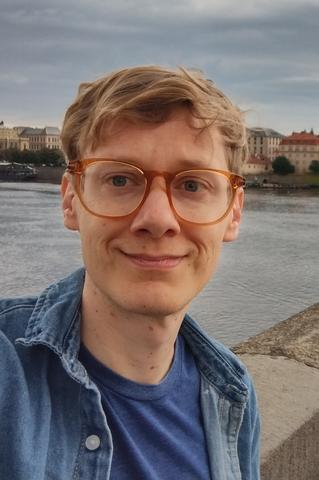
David Long will join UCF’s College of Optics and Photonics (CREOL) faculty in December, bringing expertise in optical frequency combs, spectroscopy and integrated photonics.
Long comes to CREOL from Leidos, Inc., where he served as Director of Research for Quantum Information Systems. Previously, he was a project leader in the Photonics and Optomechanics Group at the National Institute of Standards and Technology (NIST). He earned his Ph.D. in chemistry from the California Institute of Technology.
At CREOL, Long’s research group will focus on optical frequency combs — highly precise sources of light that can be used across a wide range of scientific and technological applications. His work has pioneered methods for generating these combs, translating them to new wavelengths through nonlinear optics and integrating the technology onto compact photonic chips.
These advances enable high-power optical frequency combs spanning wavelengths from the visible to the mid-infrared while reducing the size, weight and power requirements of the systems. Long plans to apply these capabilities to challenges in quantum science, combustion and hypersonics, as well as position, navigation and timing (PNT).
Throughout his career, Long has applied advanced spectroscopic and photonic techniques to areas including quantum sensing, photonic quantum systems, ultrafast dynamics, molecular spectroscopy and inertial sensing. More recently, his work has focused on transitioning these technologies to chip-scale integrated photonics platforms.
“I’m thrilled to be joining the world-class faculty at CREOL,” Long says. “My career has taken me across academia, government and industry, and I’m excited to return to academia. At CREOL, I’ll have the opportunity to pursue cutting-edge photonics research while training the next generation of scientists and engineers to tackle important scientific challenges.”
Long’s work has received numerous honors, including the Presidential Early Career Award for Scientists and Engineers, the Coblentz Award, the Department of Commerce Silver Medal and the Sigma Xi Young Scientist Award. He has also received fellowships from the National Science Foundation and the National Defense Science and Engineering Graduate Fellowship Program, as well as the Barry M. Goldwater and Morris K. Udall scholarships.