Bandres Group Publications
★ Google ScholarTopological Photonics Structured Light Space-Time Ultrafast Pulses Laser Resonators Branched Flow of Light Photonic Lanterns Optical Fibers
Topological Photonics

Bulk soliton dynamics in bosonic topological insulators
J. L. Marzuola, M. C. Rechtsman, B. Osting, M. A. Bandres · Physical Review A 113, 033519 (2026)
Abstract
We theoretically explore the dynamics of spatial solitons in nonlinear or interacting bosonic topological insulators. We employ a time-reversal broken Lieb-lattice analog of a Chern insulator and find that in the presence of a saturable nonlinearity, stable solitons bifurcate from a band of nonzero Chern number into the topological band gap with vortexlike structure on a sublattice. We numerically demonstrate the existence of stable vortex solitons for a range of parameters and that the lattice soliton dynamics is subject to the anomalous velocity associated with large Berry curvature at the topological Lieb band edge. The features of the vortex solitons are well described by an underlying continuum Dirac model. We further show a different kind of interaction: when these topological solitons bounce off the edge of a finite structure, they create chiral edge states, giving rise to an anomalous reflection of the soliton from the boundary.

Topological protection of partially coherent light
K. Tschernig, G. Martinez-Niconoff, K. Busch, M. A. Bandres, A. Perez-Leija · Photonics Research 10, 1223 (2022)
Abstract
Topological physics exploits concepts from geometry and topology to implement systems capable of guiding waves in an unprecedented fashion. These ideas have led to the development of photonic topological insulators, which are optical systems whose eigenspectral topology allows the creation of light states that propagate along the edge of the system without any coupling into the bulk or backscattering even in the presence of disorder. Indeed, topological protection is a fully coherent effect, and it is not clear to what extent topological effects endure when the wavefronts become partially coherent. Here, we study the interplay of topological protection and the degree of spatial coherence of classical light propagating in disordered photonic topological insulators. Our results reveal the existence of a well-defined spectral window in which partially coherent light is topologically protected. This opens up the design space to a wider selection of light sources, possibly yielding smaller, cheaper, and more robust devices based on the topological transport of light.

Topological protection of highly entangled non-Gaussian two-photon states
K. Tschernig, R. Lo Franco, M. Ivanov, M. A. Bandres, K. Busch, A. Perez-Leija · Materials for Quantum Technology 1, 035001 (2021)
Abstract
We study theoretically the evolution of entangled non-Gaussian two-photon states in disordered topological lattices. Specifically, we consider spatially entangled two-photon states, modulated by Laguerre polynomials up to the 3rd order, which feature ring-shaped spatial and spectral correlation patterns. Such states are discrete analogs of photon-subtracted squeezed states, which are ubiquitous in optical quantum information processing or sensing applications. We find that, in general, a higher degree of entanglement coincides with a loss of topological protection against disorder, this is in line with previous results for Gaussian two-photon states. However, we identify a particular regime in the parameter space of the considered non-Gaussian states, where the situation is reversed and an increase of entanglement can be beneficial for the transport of two-photon quantum states through disordered regions.

Topological protection versus degree of entanglement of two-photon light in photonic topological insulators
K. Tschernig, A. Jimenez-Galan, D. N. Christodoulides, M. Ivanov, K. Busch, M. A. Bandres, A. Perez-Leija · Nature Communications 12, 1974 (2021)
Abstract
Topological insulators combine insulating properties in the bulk with scattering-free transport along edges, supporting dissipationless unidirectional energy and information flow even in the presence of defects and disorder. The feasibility of engineering quantum Hamiltonians with photonic tools, combined with the availability of entangled photons, raises the intriguing possibility of employing topologically protected entangled states in optical quantum computing and information processing. However, while two-photon states built as a product of two topologically protected single-photon states inherit full protection from their singlephoton “parents”, a high degree of non-separability may lead to rapid deterioration of the two-photon states after propagation through disorder. In this work, we identify physical mechanisms which contribute to the vulnerability of entangled states in topological photonic lattices. Further, we show that in order to maximize entanglement without sacrificing topological protection, the joint spectral correlation map of two-photon states must fit inside a well-defined topological window of protection.

Topological photonics: where do we go from here?
M. Segev, M. A. Bandres · Nanophotonics 10, 425 (2021)
Abstract
Topological photonics is currently one of the most active research areas in optics and also one of the spearheads of research in topological physics at large. We are now more than a decade after it started. Topological photonics has already proved itself as an excellent platform for experimenting with concepts imported from condensed matter physics. But more importantly, topological photonics has also triggered new fundamental ideas of its own and has offered exciting applications that could become real technologies in the near future. Keywords: lasers; photonics; topological insulators; topological photonics.

Mode-locked topological insulator laser utilizing synthetic dimensions
Z. Yang, E. Lustig, G. Harari, Y. Plotnik, Y. Lumer, M. A. Bandres, M. Segev · Physical Review X 10, 011059 (2020)
Abstract
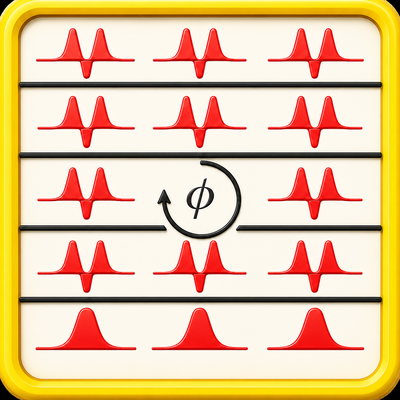
We propose a system that exploits the fundamental features of topological photonics and synthetic dimensions to force many semiconductor laser resonators to synchronize, mutually lock, and under suitable modulation emit a train of transform-limited mode-locked pulses. These lasers exploit the Floquet topological edge states in a 1D array of ring resonators, which corresponds to a 2D topological system with one spatial dimension and one synthetic frequency dimension. We show that the lasing state of the multielement laser system possesses the distinct characteristics of spatial topological edge states while exhibiting topologically protected transport. The topological synthetic-space edge mode imposes a constant-phase difference between the multifrequency modes on the edges, and together with modulation of the individual elements forces the ensemble of resonators to mode lock and emit short pulses, robust to disorder in the multiresonator system. Our results offer a proof-of-concept mechanism to actively mode lock a laser diode array of many lasing elements, which is otherwise extremely difficult due to the presence of many spatial modes of the array. The topological synthetic-space concepts proposed here offer an avenue to overcome this major technological challenge and open new opportunities in laser physics.
Photonic topological insulator in synthetic dimensions
E. Lustig, S. Weimann, Y. Plotnik, Y. Lumer, M. A. Bandres, A. Szameit, M. Segev · Nature 567, 356 (2019)
Abstract
Topological phases enable protected transport along the edges of materials, offering immunity against scattering from disorder and imperfections. These phases have been demonstrated for electronic systems, electromagnetic waves, cold atoms, acoustics and even mechanics, and their potential applications include spintronics, quantum computing and highly efficient lasers. Typically, the model describing topological insulators is a spatial lattice in two or three dimensions. However, topological edge states have also been observed in a lattice with one spatial dimension and one synthetic dimension (corresponding to the spin modes of an ultracold atom), and atomic modes have been used as synthetic dimensions to demonstrate lattice models and physical phenomena that are not accessible to experiments in spatial lattices. In photonics, topological lattices with synthetic dimensions have been proposed for the study of physical phenomena in high dimensions and interacting photons, but so far photonic topological insulators in synthetic dimensions have not been observed. Here we demonstrate experimentally a photonic topological insulator in synthetic dimensions. We fabricate a photonic lattice in which photons are subjected to an effective magnetic field in a space with one spatial dimension and one synthetic modal dimension. Our scheme supports topological edge states in this spatial-modal lattice, resulting in a robust topological state that extends over the bulk of a two-dimensional real-space lattice. Our system can be used to increase the dimensionality of a photonic lattice and induce long-range coupling by design, leading to lattice models that can be used to study unexplored physical phenomena.

Light guiding by artificial gauge fields
Y. Lumer*, M. A. Bandres*, M. Heinrich, L. J. Maczewsky, H. Herzig-Sheinfux, A. Szameit, M. Segev · Nature Photonics 13, 339 (2019)
Abstract
Artificial gauge fields enable uncharged particles to behave as if affected by external fields. Generated by geometry or modulation, artificial gauge fields are instrumental in realizing topological physics in photonics, cold atoms and acoustics. Here, we experimentally demonstrate waveguiding by artificial gauge fields. We construct artificial gauge fields by using waveguide arrays with non-trivial trajectories. Tilting the arrays results in gauge fields that are different in the core and cladding, shifting their dispersion curves, thereby confining the light to the core. In a more advanced setting, we demonstrate waveguiding in a medium with the same gauge and dispersion everywhere, where the only difference between the core and the cladding is a phase shift in the dynamics of the gauge fields, which facilitates waveguiding via bound states in the continuum. Waveguiding and bound states in the continuum via artificial gauge fields relate to a plethora of systems, ranging from photonics and microwaves to cold atoms and acoustics.

Exciton-polariton topological insulator
S. Klembt, T. H. Harder, O. A. Egorov, K. Winkler, R. Ge, M. A. Bandres, M. Emmerling, L. Worschech, T. C. H. Liew, M. Segev, C. Schneider, S. Höfling · Nature 562, 552 (2018)
Abstract
Topological insulators—materials that are insulating in the bulk but allow electrons to flow on their surface—are striking examples of materials in which topological invariants are manifested in robustness against perturbations such as defects and disorder. Their most prominent feature is the emergence of edge states at the boundary between areas with different topological properties. The observable physical effect is unidirectional robust transport of these edge states. Topological insulators were originally observed in the integer quantum Hall effect and subsequently suggested and observed to exist without a magnetic field, by virtue of other effects such as strong spin–orbit interaction. During the past decade, the concepts of topological physics have been introduced into other fields, including microwaves, photonic systems, cold atoms, acoustics and even mechanics. Recently, topological insulators were suggested to be possible in exciton-polariton systems organized as honeycomb (graphene-like) lattices, under the influence of a magnetic field. Here we demonstrate experimentally an exciton-polariton topological insulator. Our lattice of coupled semiconductor microcavities is excited non-resonantly by a laser, and an applied magnetic field leads to the unidirectional flow of a polariton wavepacket around the edge of the array. We demonstrate that the topological edge mode goes around defects, and that its propagation direction can be reversed by inverting the applied magnetic field. Our exciton-polariton topological insulator paves the way for topological phenomena that involve light–matter interaction, amplification and the interaction of exciton-polaritons as a nonlinear many-body system.

Topological insulator laser: experiments
M. A. Bandres*, S. Wittek*, G. Harari*, M. Parto, J. Ren, M. Segev, D. N. Christodoulides, M. Khajavikhan · Science 359, eaar4005 (2018)
★ Optics in 2018PDF
Abstract
Reports the experimental realization of a topological insulator laser: an array of coupled ring resonators whose lasing occurs in a topologically protected edge mode, yielding robust single-mode emission with high slope efficiency that is immune to defects and disorder.

Topological insulator laser: theory
G. Harari*, M. A. Bandres*, Y. Lumer, M. C. Rechtsman, Y. D. Chong, M. Khajavikhan, D. N. Christodoulides, M. Segev · Science 359, eaar4003 (2018)
Abstract
Develops the theoretical framework for topological insulator lasers, showing how topologically protected edge modes in an active (gain) lattice can be made to lase as a single robust mode, and predicting their key properties.

Edge-mode lasing in 1D topological active arrays
M. Parto, S. Wittek, H. Hodaei, G. Harari, M. A. Bandres, J. Ren, M. C. Rechtsman, M. Segev, D. N. Christodoulides, M. Khajavikhan · Physical Review Letters 120, 113901 (2018)
Abstract
We report the first observation of lasing topological edge states in a 1D Su-Schrieffer-Heeger active array of microring resonators. We show that the judicious use of non-Hermiticity can promote single edge-mode lasing in such arrays. Our experimental and theoretical results demonstrate that, in the presence of chiraltime symmetry, this non-Hermitian topological structure can experience phase transitions that are dictated by a complex geometric phase. Our work may pave the way towards understanding the fundamental aspects associated with the interplay among non-Hermiticity, nonlinearity, and topology in active systems.

Curved-space topological phases in photonic lattices
E. Lustig, M. I. Cohen, R. Bekenstein, G. Harari, M. A. Bandres, M. Segev · Physical Review A 96, 041804(R) (2017)
Abstract
2 We introduce topological phases in curved-space photonic lattices. In such systems, the interplay between the curvature of space and the topology of the system, as manifested in the topology of the band structure, gives rise to a wealth of new phenomena. We demonstrate the topological curved-space concepts in an experimentally realizable setting of a waveguiding layer covering the surface of a three-dimensional body, and show that the curvature of space can induce topological edge states, topological phase transitions, Thouless pumping, and localization effects. We also describe the analogy between our system and topological phases in dynamical curved space-time settings known from general relativity.
Analogue of Rashba pseudo-spin-orbit coupling in photonic lattices by gauge field engineering
Y. Plotnik, M. A. Bandres, S. Stützer, Y. Lumer, M. C. Rechtsman, A. Szameit, M. Segev · Physical Review B 94, 020301(R) (2016)
Abstract
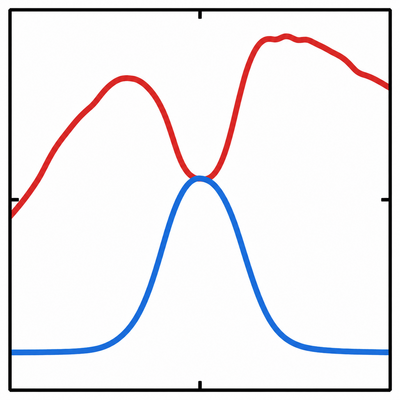
We present, theoretically and experimentally, the observation of the Rashba effect in photonic lattices, where the effect is brought about by an artificial gauge field, induced by the geometry of the system. In doing that, we demonstrate a particular form of coupling between pseudospin and momentum, resulting in spin-dependent shifts in the spectrum. Our system consists of two coupled, oppositely tilted waveguide arrays, where the evolution of an optical beam allows for probing the dynamics of the evolving wave packets, and the formation of spectral splitting. We show that the Rashba effect can be amplified or decreased through optical nonlinear effects, which correspond to mean-field interactions in various systems such as cold-atom lattices and exciton-polariton condensates.

Topological photonic quasicrystals: fractal topological spectrum and protected transport
M. A. Bandres, M. C. Rechtsman, M. Segev · Physical Review X 6, 011016 (2016)
Abstract
2 We show that it is possible to have a topological phase in two-dimensional quasicrystals without any magnetic field applied, but instead introducing an artificial gauge field via dynamic modulation. This topological quasicrystal exhibits scatter-free unidirectional edge states that are extended along the system’s perimeter, contrary to the states of an ordinary quasicrystal system, which are characterized by power-law decay. We find that the spectrum of this Floquet topological quasicrystal exhibits a rich fractal (self-similar) structure of topological “minigaps,” manifesting an entirely new phenomenon: fractal topological systems. These topological minigaps form only when the system size is sufficiently large because their gapless edge states penetrate deep into the bulk. Hence, the topological structure emerges as a function of the system size, contrary to periodic systems where the topological phase can be completely characterized by the unit cell. We demonstrate the existence of this topological phase both by using a topological index (Bott index) and by studying the unidirectional transport of the gapless edge states and its robustness in the presence of defects. Our specific model is a Penrose lattice of helical optical waveguides—a photonic Floquet quasicrystal; however, we expect this new topological quasicrystal phase to be universal.

Experimental observation of bulk and edge transport in photonic Lieb lattices
D. Guzman-Silva, C. Mejia-Cortes, M. A. Bandres, M. C. Rechtsman, S. Weimann, S. Nolte, M. Segev, A. Szameit, R. A. Vicencio · New Journal of Physics 16, 063061 (2014)
Abstract
We analyze the transport of light in the bulk and at the edge of photonic Lieb lattices, whose unique feature is the existence of a flat band representing stationary states in the middle of the band structure that can form localized bulk states. We find that transport in bulk Lieb lattices is significantly affected by the particular excitation site within the unit cell, due to overlap with the flat band states. Additionally, we demonstrate the existence of new edge states in anisotropic Lieb lattices. These states arise due to a virtual defect at the lattice edges and are not described by the standard tight-binding model.
Structured Light

Observation of Boyer-Wolf Gaussian modes
K. Tschernig, D. Guacaneme, O. Mhibik, I. Divliansky, M. A. Bandres · Nature Communications 15, 5301 (2024)
Abstract
Stable laser resonators support three fundamental families of transverse modes: the Hermite, Laguerre, and Ince Gaussian modes. These modes are crucial for understanding complex resonators, beam propagation, and structured light. We experimentally observe a new family of fundamental laser modes in stable resonators: Boyer-Wolf Gaussian modes. By studying the isomorphism between laser cavities and quadratic Hamiltonians, we design a laser resonator equivalent to a quantum two-dimensional anisotropic harmonic oscillator with a 2:1 frequency ratio. The generated Boyer-Wolf Gaussian modes exhibit a parabolic structure and show remarkable agreement with our theoretical predictions. These modes are also eigenmodes of a 2:1 anisotropic gradient refractive index medium, suggesting their presence in any physical system with a 2:1 anisotropic quadratic potential. We identify a transition connecting Boyer-Wolf Gaussian modes to Weber nondiffractive parabolic beams. These new modes are foundational for structured light, and open exciting possibilities for applications in laser micromachining, particle micromanipulation, and optical communications.

Transition from Ince-Gaussian beams to nondiffractive Mathieu beams
S. Bhargava, K. Tschernig, D. Guacaneme, M. A. Bandres · Optics Letters 49, 5320 (2024)
Abstract
We show that under the appropriate conditions, the Ince–Gaussian modes (IGBs) of stable resonators display a behavior very similar to that of the Mathieu beams (MBs), exhibiting nondiffracting propagation and self-healing properties. We show that the high-order IGB propagates in a quasi-nondiffractive manner within the same conical region as any nondiffractive beam, even when their profiles do not match exactly. Our results indicate new, to our knowledge, methods to generate a quasi-nondiffractive MB from spherical resonators and provide more efficient ways to generate them in the Fourier space. These high-order IGBs are an excellent option for applications where a quasinondiffractive, but not exact, behavior is required.
Observation of accelerating wavepackets in curved space
A. Patsyk*, M. A. Bandres*, R. Bekenstein, M. Segev · Physical Review X 8, 011001 (2018)
Abstract
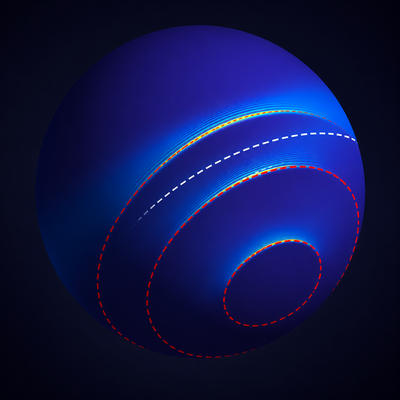
We present the first experimental observation of accelerating beams in curved space. More specifically, we demonstrate, experimentally and theoretically, shape-preserving accelerating beams propagating on spherical surfaces: closed-form solutions of the wave equation manifesting nongeodesic self-similar evolution. Unlike accelerating beams in flat space, these wave packets change their acceleration trajectory due to the interplay between interference effects and the space curvature, and they focus and defocus periodically due to the spatial curvature of the medium in which they propagate.

Generation of nonparaxial accelerating fields through mirrors. II: Three dimensions
M. A. Alonso, M. A. Bandres · Optics Express 22, 14738 (2014)
Abstract
Accelerating beams are wave packets that preserve their shape while propagating along curved trajectories. In this article, we extend the ray-based treatment in Part I of this series to nonparaxial accelerating fields in three dimensions, whose intensity maxima trace circular or helical paths. We also describe a simple procedure for finding mirror shapes that convert collimated beams into fields whose intensity features trace arcs that can extend well beyond 180 degrees.

Generation of nonparaxial accelerating fields through mirrors. I: Two dimensions
M. A. Alonso, M. A. Bandres · Optics Express 22, 7124 (2014)
Abstract
Accelerating beams are wave packets that preserve their shape while propagating along curved trajectories. Recent constructions of nonparaxial accelerating beams cannot span more than a semicircle. Here, we present a ray based analysis for nonparaxial accelerating fields and pulses in two dimensions. We also develop a simple geometric procedure for finding mirror shapes that convert collimated fields or fields emanating from a point source into accelerating fields tracing circular caustics that extend well beyond a semicircle.

Accelerating light beams with arbitrarily transverse shapes
A. Ruelas, J. A. Davis, I. Moreno, D. M. Cottrell, M. A. Bandres · Optics Express 22, 3490 (2014)
Abstract
Accelerating beams are wave packets that preserve their shape while propagating along curved trajectories. Their unique characteristics have opened the door to applications that range from optical micromanipulation and plasma-channel generation to laser micromachining. Here, we demonstrate, theoretically and experimentally, that accelerating beams can be generated with a variety of arbitrarily chosen transverse shapes. We present a general method to construct such beams in the paraxial and nonparaxial regime and demonstrate experimentally their propagation in the paraxial case. The key ingredient of our method is the use of the spectral representation of the accelerating beams, which offers a unique and compact description of these beams. The on-demand accelerating light patterns described here are likely to give rise to new applications and add versatility to the current ones.

Three-dimensional accelerating electromagnetic waves
M. A. Bandres, M. A. Alonso, I. Kaminer, M. Segev · Optics Express 21, 13917 (2013)
Abstract
We present a general theory of three-dimensional nonparaxial spatially-accelerating waves of the Maxwell equations. These waves constitute a two-dimensional structure exhibiting shape-invariant propagation along semicircular trajectories. We provide classification and characterization of possible shapes of such beams, expressed through the angular spectra of parabolic, oblate and prolate spheroidal fields. Our results facilitate the design of accelerating beams with novel structures, broadening scope and potential applications of accelerating beams.
Nondiffracting accelerating waves: Weber waves and parabolic momentum
M. A. Bandres, B. M. Rodriguez-Lara · New Journal of Physics 15, 013054 (2013)
Abstract
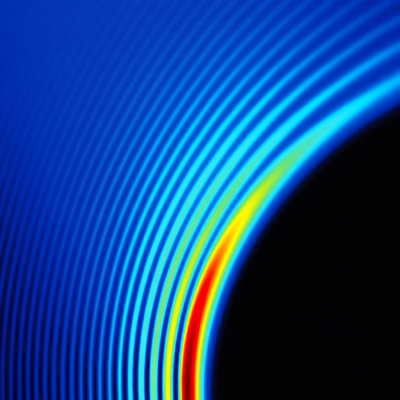
Diffraction is one of the universal phenomena of physics, and a way to overcome it has always represented a challenge for physicists. In order to control diffraction, the study of structured waves has become decisive. Here, we present a specific class of nondiffracting spatially accelerating solutions of the Maxwell equations: the Weber waves. These nonparaxial waves propagate along parabolic trajectories while approximately preserving their shape. They are expressed in an analytic closed form and naturally separate in forward and backward propagation. We show that the Weber waves are self-healing, can form periodic breather waves and have a well-defined conserved quantity: the parabolic momentum. We find that our Weber waves for moderate to large values of the parabolic momenta can be described by a modulated Airy function. Because the Weber waves are exact time-harmonic solutions of the wave equation, they have implications for many linear wave systems in nature, ranging from acoustic, electromagnetic and elastic waves to surface waves in fluids and membranes.
Spherical fields as nonparaxial accelerating waves
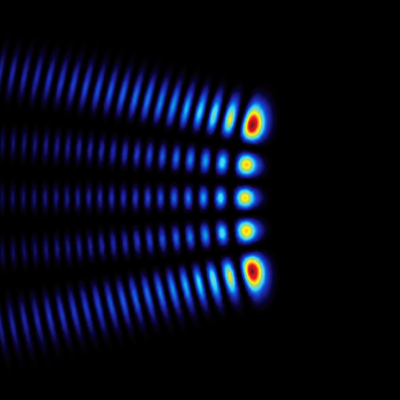
M. A. Alonso, M. A. Bandres · Optics Letters 37, 5175 (2012)
Abstract
posted November 19, 2012 (Doc. ID 178481); published December 12, 2012 We introduce nonparaxial spatially accelerating waves whose two-dimensional transverse profiles propagate along semicircular trajectories while approximately preserving their shape. We derive these waves by considering imaginary displacements on spherical fields, leading to simple closed-form expressions. The structure of these waves also allows the closed-form description of pulses.
Higher-order moments and overlaps of Cartesian beams
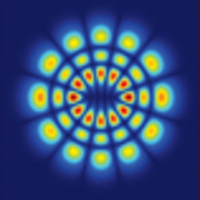
M. A. Bandres, D. López-Mago, J. C. Gutiérrez-Vega · Journal of Optics 12, 065702 (2010)
Abstract
We introduce a closed-form expression for the overlap between two different Cartesian beams. In the course of obtaining this expression, we establish a linear relation between the overlap of circular beams with azimuthal symmetry and the overlap of Cartesian beams such that the knowledge of the former allows the latter to be calculated very easily. Our formalism can be easily applied to calculate relevant beam parameters such as the normalization constants, the M 2 factors, the kurtosis parameters, the expansion coefficients of Cartesian beams, and therefore of all their relevant special cases, including the standard, elegant, and generalized Hermite–Gaussian beams, cosh-Gaussian beams, Lorentz beams, and Airy beams, among others.
Higher-order moments and overlaps of rotationally symmetric beams
M. A. Bandres, D. López-Mago, J. C. Gutiérrez-Vega · Journal of Optics 12, 015706 (2010)
Abstract
We introduce a closed-form expression for the overlap between two different circular beams (CiBs) with azimuthal symmetry. A full description of the propagation of the higher-order moments of the CiBs through paraxial ABCD systems is presented. Our formalism can be easily applied to calculate relevant beam parameters such as the normalization constants, the M 2 factors, the kurtosis parameters, the expansion coefficients of the CiBs, and therefore of all its relevant special cases, including the standard, elegant, and generalized Laguerre–Gaussian beams, Bessel–Gaussian beams, hypergeometric–Gaussian beams, quadratic Bessel–Gaussian beams, and optical vortex beams, among others.

Accelerating beams
M. A. Bandres · Optics Letters 34, 3791 (2009)
Abstract
posted October 29, 2009 (Doc. ID 116499); published December 4, 2009 We demonstrate that any two-dimensional accelerating beam can be described in a canonical form in Fourier space. In particular, we demonstrate that there is a one-to-one correspondence between complex functions in the real line (the line spectrum) and accelerating beams. An arbitrary line spectrum can be used to generate novel accelerating beams with diverse transverse shapes. The line spectra for the special cases of the families of Airy and accelerating parabolic beams are provided.
Generation of accelerating Airy and accelerating parabolic beams
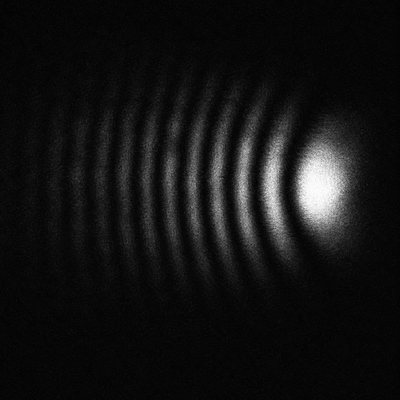
J. A. Davis, M. J. Mitry, M. A. Bandres, I. Ruiz, K. P. McAuley, D. M. Cottrell · Applied Optics 48, 3170 (2009)
Abstract
posted 26 May 2009 (Doc. ID 109056); published 5 June 2009 We generate both accelerated Airy and accelerated parabolic beams using phase-only patterns encoded onto a liquid crystal display (LCD). The usual system length is 2f , where f is the focal length of the Fourier transform lens. We develop a compact optical system having a total system length of f . However, the mask must now incorporate the Fresnel diffraction that is not provided by the reduced optical system length. Finally we incorporate the Fourier transform lens onto the mask. We obtain excellent experimental results with a phase-only pattern and a shorter optical system. This approach makes these beams much easier to implement.
Paraxial group
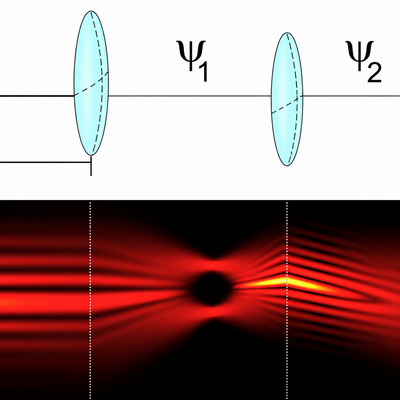
M. A. Bandres, M. Guizar-Sicairos · Optics Letters 34, 13 (2009)
Abstract
posted October 16, 2008 (Doc. ID 101079); published December 19, 2008 We introduce the paraxial group, the group of symmetries of the paraxial-wave equation and its action on paraxial beams. The transformations, elements of the group, are used to obtain closed-form expressions for the propagation of any paraxial beam through misaligned ABCD optical systems. We prove that any paraxial beam is form-invariant under these transformations.

Elliptical beams
M. A. Bandres, J. C. Gutiérrez-Vega · Optics Express 16, 21087 (2008)
Abstract
A very general beam solution of the paraxial wave equation in elliptic cylindrical coordinates is presented. We call such a field an elliptic beam (EB). The complex amplitude of the EB is described by either the generalized Ince functions or the Whittaker-Hill functions and is characterized by four parameters that are complex in the most general situation. The propagation through complex ABCD optical systems and the conditions for square integrability are studied in detail. Special cases of the EB are the standard, elegant, and generalized Ince-Gauss beams, Mathieu-Gauss beams, among others.

Observation of accelerating parabolic beams
J. A. Davis, M. J. Mitry, M. A. Bandres, D. M. Cottrell · Optics Express 16, 12866 (2008)
Abstract
We report the first observation of accelerating parabolic beams. These accelerating parabolic beams are similar to the Airy beams because they exhibit the unusual ability to remain diffraction-free while having a quadratic transverse shift during propagation. The amplitude and phase masks required to generate these beams are encoded onto a single liquid crystal display. Experimental results agree well with theory.
Accelerating parabolic beams
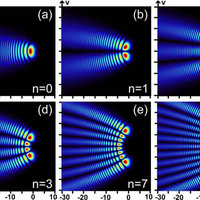
M. A. Bandres · Optics Letters 33, 1678 (2008)
Abstract
posted June 20, 2008 (Doc. ID 96139); published July 22, 2008 We demonstrate the existence of accelerating parabolic beams that constitute, together with the Airy beams, the only orthogonal and complete families of solutions of the two-dimensional paraxial wave equation that exhibit the unusual ability to remain diffraction-free and freely accelerate during propagation. Since the accelerating parabolic beams, like the Airy beams, carry infinite energy, we present exact finite-energy accelerating parabolic beams that still retain their unusual features over several diffraction lengths.
Circular beams
M. A. Bandres, J. C. Gutiérrez-Vega · Optics Letters 33, 177 (2008)
Abstract
posted December 10, 2007 (Doc. ID 89560); published January 11, 2008 A very general beam solution of the paraxial wave equation in circular cylindrical coordinates is presented. We call such a field a circular beam (CiB). The complex amplitude of the CiB is described by either the Whittaker functions or the confluent hypergeometric functions and is characterized by three parameters that are complex in the most general situation. The propagation through complex ABCD optical systems and the conditions for square integrability are studied in detail. Special cases of the CiB are the standard, elegant, and generalized Laguerre–Gauss beams; Bessel–Gauss beams; hypergeometric beams; hypergeometric– Gaussian beams; fractional-order elegant Laguerre–Gauss beams; quadratic Bessel–Gauss beams; and optical vortex beams.
Airy-Gauss beams and their transformation by paraxial optical systems
M. A. Bandres, J. C. Gutiérrez-Vega · Optics Express 15, 16719 (2007)
Abstract
We introduce the generalized Airy-Gauss (AiG) beams and analyze their propagation through optical systems described by ABCD matrices with complex elements in general. The transverse mathematical structure of the AiG beams is form-invariant under paraxial transformations. The conditions for square integrability of the beams are studied in detail. The AiG beam describes in a more realistic way the propagation of the Airy wave packets because AiG beams carry finite power, retain the nondiffracting propagation properties within a finite propagation distance, and can be realized experimentally to a very good approximation.
Cartesian beams
M. A. Bandres, J. C. Gutiérrez-Vega · Optics Letters 32, 3459 (2007)
Abstract
posted October 23, 2007 (Doc. ID 87481); published November 29, 2007 A new and very general beam solution of the paraxial wave equation in Cartesian coordinates is presented. We call such a field a Cartesian beam. The complex amplitude of the Cartesian beams is described by either the parabolic cylinder functions or the confluent hypergeometric functions, and the beams are characterized by three parameters that are complex in the most general situation. The propagation through complex ABCD optical systems and the conditions for square integrability are studied in detail. Applying the general expression of the Cartesian beams, we also derive two new and meaningful beam structures that, to our knowledge, have not yet been reported in the literature. Special cases of the Cartesian beams are the standard, elegant, and generalized Hermite–Gauss beams, the cosine-Gauss beams, the Lorentz beams, and the fractional order beams.

Normalization of the Mathieu-Gauss optical beams
J. C. Gutiérrez-Vega, M. A. Bandres · JOSA A 24, 215 (2007)
Abstract
posted August 8, 2006 (Doc. ID 71939); published December 13, 2006 A series scheme is discussed for the determination of the normalization constants of the even and odd Mathieu–Gauss (MG) optical beams. We apply a suitable expansion in terms of Bessel–Gauss (BG) beams and also answer the question of how many BG beams should be used to synthesize a MG beam within a tolerance. The structure of the normalization factors ensures that MG beams will always be normalized independently of the particular normalization adopted for the Mathieu functions. In this scheme, the normalization constants are expressed as rapidly convergent series that can be calculated to an arbitrary precision.
Propagation of generalized vector Helmholtz-Gauss beams through paraxial optical systems
R. I. Hernández-Aranda, J. C. Gutiérrez-Vega, M. Guizar-Sicairos, M. A. Bandres · Optics Express 14, 8974 (2006)
Abstract
We introduce the generalized vector Helmholtz-Gauss (gVHzG) beams that constitute a general family of localized beam solutions of the Maxwell equations in the paraxial domain. The propagation of the electromagnetic components through axisymmetric ABCD optical systems is expressed elegantly in a coordinate-free and closed-form expression that is fully characterized by the transformation of two independent complex beam parameters. The transverse mathematical structure of the gVHzG beams is form-invariant under paraxial transformations. Any paraxial beam with the same waist size and transverse spatial frequency can be expressed as a superposition of gVHzG beams with the appropriate weight factors. This formalism can be straightforwardly applied to propagate vector Bessel-Gauss, Mathieu-Gauss, and Parabolic-Gauss beams, among others.

Observation of the propagation properties of Helmholtz-Gauss beams
C. López-Mariscal, M. A. Bandres, J. C. Gutiérrez-Vega · Optical Engineering 45, 068001 (2006)
Abstract
intensity distribution experimentally and their evolution upon propagation. We also observe the power spectra of these beams and record their spatial intensity variation and compare our observations with theoretical predictions.10 A feature of special interest is that of MG and PG beams on free-space propagation. In particular, we observe a twisting behavior that the transverse energy flow presents with specific spatial characteristics inherent to the spatial properties of the wavefields.11,12 Since each family of HzG beams forms a basis for expanding any HzG beam, their study is of fundamental importance. Potential applications of HzG beams include manipulation of microparticles,13 metrology, microlithography,14 medical imaging,15 nonlinear optics and optical and wireless communications among others.16

Generation of helical Ince-Gaussian beams with a liquid-crystal display
J. B. Bentley, J. A. Davis, M. A. Bandres, J. C. Gutiérrez-Vega · Optics Letters 31, 649 (2006)
Abstract
Tecnológico de Monterrey, Monterrey 64849, México We generate helical Ince–Gaussian (HIG) beams by using complex amplitude and phase masks encoded onto a liquid-crystal display (LCD). These beams display an intensity pattern consisting of elliptic rings, whose number and ellipticity can be controlled, and a phase exhibiting a number of in-line vortices, each with a unitary topological charge. We show experimental results that display the properties of these elliptic dark hollow beams. We introduce a novel interference technique for generating the object and reference beams by using a single LCD and show the vortex interference patterns. We expect that these HIG beams will be useful in optical trapping applications.
Vector Helmholtz-Gauss and vector Laplace-Gauss beams
M. A. Bandres, J. C. Gutiérrez-Vega · Optics Letters 30, 2155 (2005)
Abstract
We demonstrate the existence of vector Helmholtz–Gauss (vHzG) and vector Laplace–Gauss beams that constitute two general families of localized vector beam solutions of the Maxwell equations in the paraxial approximation. The electromagnetic components are determined starting from the scalar solutions of the twodimensional Helmholtz and Laplace equations, respectively. Special cases of the vHzG beams are TE and TM Gaussian vector beams, nondiffracting vector Bessel beams, polarized Bessel–Gauss beams, modes in cylindrical waveguides and cavities, and scalar Helmholtz–Gauss beams. The general expression of the vHzG beams can be used straightforwardly to obtain vector Mathieu–Gauss and vector parabolic-Gauss beams, which to our knowledge have not yet been reported.

Observation of parabolic nondiffracting optical fields
C. López-Mariscal, M. A. Bandres, S. Chávez-Cerda, J. C. Gutiérrez-Vega · Optics Express 13, 2364 (2005)
Abstract
We report the first experimental observation of parabolic nondiffracting beams, the fourth fundamental family of propagation-invariant optical fields of the Helmholtz equation. We generate the even and odd stationary parabolic beam and with them we are able to produce traveling parabolic beams. It is observed that these fields exhibit a number of unitary in–line vortices that do not interact on propagation. The experimental transverse patterns show an inherent parabolic structure in good agreement with the theoretical predictions. Our results exhibit a transverse energy flow of traveling beams never observed before.
Ince-Gaussian series representation of the two-dimensional fractional Fourier transform
M. A. Bandres, J. C. Gutiérrez-Vega · Optics Letters 30, 540 (2005)
Abstract
We introduce the Ince– Gaussian series representation of the two-dimensional fractional Fourier transform in elliptical coordinates. A physical interpretation is provided in terms of field propagation in quadratic graded-index media whose eigenmodes in elliptical coordinates are derived for the first time to our knowledge. The kernel of the new series representation is expressed in terms of Ince – Gaussian functions. The equivalence among the Hermite – Gaussian, Laguerre – Gaussian, and Ince – Gaussian series representations is verified by establishing the relation among the three definitions.
Helmholtz-Gauss waves
J. C. Gutiérrez-Vega, M. A. Bandres · JOSA A 22, 289 (2005)
Abstract
A detailed study of the propagation of an arbitrary nondiffracting beam whose disturbance in the plane z ⫽ 0 is modulated by a Gaussian envelope is presented. We call such a field a Helmholtz–Gauss (HzG) beam. A simple closed-form expression for the paraxial propagation of the HzG beams is written as the product of three factors: a complex amplitude depending on the z coordinate only, a Gaussian beam, and a complex scaled version of the transverse shape of the nondiffracting beam. The general expression for the angular spectrum of the HzG beams is also derived. We introduce for the first time closed-form expressions for the Mathieu–Gauss beams in elliptic coordinates and for the parabolic Gauss beams in parabolic coordinates. The properties of the considered beams are studied both analytically and numerically.

Higher-order complex source for elegant Laguerre-Gaussian waves
M. A. Bandres, J. C. Gutiérrez-Vega · Optics Letters 29, 2213 (2004)
Abstract
We introduce a higher-order complex source that generates elegant Laguerre – Gaussian waves with radial mode number n and angular mode number m. We derive the integral and differential representations for the elegant Laguerre – Gaussian wave that in the appropriate limit yields the corresponding elegant Laguerre-Gaussian beam. From the spectral representation of the elegant Lauguerre – Gaussian wave we determine the first three orders of nonparaxial corrections for the corresponding paraxial elegant Laguerre – Gaussian beam.

Elegant Ince-Gaussian beams
M. A. Bandres · Optics Letters 29, 1724 (2004)
Abstract
The existence of elegant Ince – Gaussian beams that constitute a third complete family of exact and biorthogonal elegant solutions of the paraxial wave equation is demonstrated. Their transverse structure is described by Ince polynomials with a complex argument. Elegant Ince – Gaussian beams constitute exact and continuous transition modes between elegant Laguerre – Gaussian and elegant Hermite – Gaussian beams. The expansion formulas among the three elegant families are derived.
Ince-Gaussian modes of the paraxial wave equation and stable resonators
M. A. Bandres, J. C. Gutiérrez-Vega · JOSA A 21, 873 (2004)
Abstract
We present the Ince–Gaussian modes that constitute the third complete family of exact and orthogonal solutions of the paraxial wave equation in elliptic coordinates and that are transverse eigenmodes of stable resonators. The transverse shape of these modes is described by the Ince polynomials and is structurally stable under propagation. Ince–Gaussian modes constitute the exact and continuous transition modes between Laguerre– and Hermite–Gaussian modes. The expansions between the three families are derived and discussed. As with Laguerre–Gaussian modes, it is possible to construct helical Ince–Gaussian modes that exhibit rotating phase features whose intensity pattern is formed by elliptic rings and whose phase rotates elliptically.

Ince-Gaussian beams
M. A. Bandres, J. C. Gutiérrez-Vega · Optics Letters 29, 144 (2004)
Abstract
We demonstrate the existence of the Ince – Gaussian beams that constitute the third complete family of exact and orthogonal solutions of the paraxial wave equation. Their transverse structure is described by the Ince polynomials and has an inherent elliptical symmetry. Ince– Gaussian beams constitute the exact and continuous transition modes between Laguerre and Hermite – Gaussian beams. The propagating characteristics are discussed as well.
Parabolic nondiffracting optical wavefields
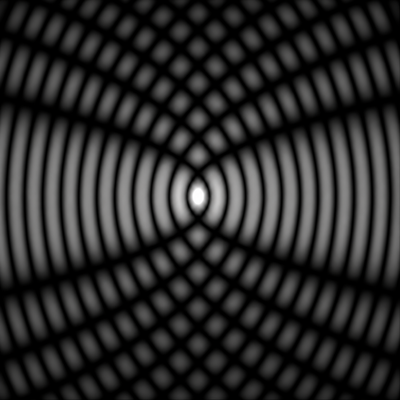
M. A. Bandres, J. C. Gutiérrez-Vega, S. Chávez-Cerda · Optics Letters 29, 44 (2004)
Abstract
We demonstrate the existence of parabolic beams that constitute the last member of the family of fundamental nondiffracting wave fields and determine their associated angular spectrum. Their transverse structure is described by parabolic cylinder functions, and contrary to Bessel or Mathieu beams their eigenvalue spectrum is continuous. Any nondiffracting beam can be constructed as a superposition of parabolic beams, since they form a complete orthogonal set of solutions of the Helmholtz equation. A novel class of traveling parabolic waves is also introduced for the first time.
Space-Time Ultrafast Pulses
Spatiotemporal control of ultrafast pulses in multimode optical fibers
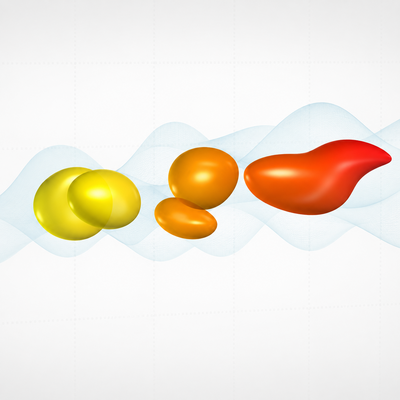
D. Cruz-Delgado, J. E. Antonio-Lopez, A. Perez-Leija, N. K. Fontaine, S. Eikenberry, D. N. Christodoulides, M. A. Bandres, R. Amezcua-Correa · Nature Communications 16, 6081 (2025)
Abstract
Multimode optical fibers represent the ideal platform for transferring multidimensional light states. However, dispersion degrades the correlations between the light’s degrees of freedom, thus limiting the effective transport of ultrashort pulses between distant nodes of optical networks. Here, we demonstrate that tailoring the spatiotemporal structure of ultrashort light pulses can overcome the physical limitations imposed by both chromatic and modal dispersion in multimode optical fibers. We synthesize these light states with predefined spatial and chromatic dynamics through applying a sequence of transformations to shape the optical field in all its dimensions. Similar methods can also be used to overcome dispersion processes in other physical settings like acoustics and electron optics. Our results will enable advancements in laser-based technologies, including multimode optical communications, imaging, ultrafast light-matter interactions, and high brightness fiber sources.

Lorentz-invariant space-time wave packets
V. Zimmermann, M. A. Bandres · Photonics Research 13, B112 (2025)
Abstract
Non-diffractive space-time wave packets (nSTWPs) represent a broad class of optical pulses capable of propagating without diffraction or dispersion in linear media. In this work, we introduce a complete family of nSTWPs that remain invariant under transverse Lorentz boosts. The Lorentz-invariant behavior of these STWPs is rigorously analyzed through their associated spectral line function, providing new insights into their fundamental properties. Furthermore, we quantify the limitations of this invariance and compare the robustness of the proposed nSTWPs against conventional nSTWPs. These findings highlight the potential of Lorentz-invariant nSTWPs for applications in robust wave packet design and space-based optical communications.

Ptychography for multidimensional characterization of spatiotemporal ultrafast pulses
D. Cruz-Delgado, A. Perez-Leija, N. K. Fontaine, D. N. Christodoulides, M. A. Bandres, R. Amezcua-Correa · ACS Photonics 11, 18 (2024)
Abstract
Tailoring pulses with intertwined spatial and temporal degrees of freedom is a promising research area that offers applications in nonlinear optics, precision machining, and imaging to mention a few. The key requirement for harnessing such spatiotemporal light structures in their entirety is to accurately discern their physical properties. Here, we demonstrate that ptychography can be applied to reveal the modal, frequency, and temporal attributes of such ultrafast spatiotemporal optical pulses. To demonstrate the potential of our scheme, we examine optical fields with intricate spatial and spectrotemporal correlations. Further, since the exact structure of the pulses is determined utilizing purely linear interactions, our approach can serve to probe and correct a great variety of spatiotemporal designs. KEYWORDS: Spatiotemporal ultrafast pulses, Space-time pulse characterization, Ptychography, Spectrally resolved tomography, Spatiotemporal pulse tailoring
Synthesis of ultrafast wavepackets with tailored spatiotemporal properties
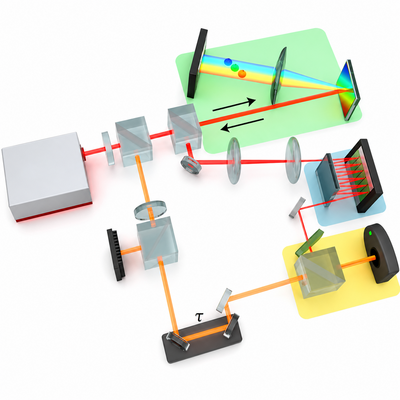
D. Cruz-Delgado, S. Yerolatsitis, N. K. Fontaine, D. N. Christodoulides, R. Amezcua-Correa, M. A. Bandres · Nature Photonics 16, 686 (2022)
★ Optics in 2023PDF
Abstract
Sculpting light in space and time can provide unprecedented opportunities in many areas of science and technology, ranging from extreme nonlinear optics and quantum networks to new families of ultrafast fibre amplifiers. Although endeavours in accessing the light's temporal and spatial degrees of freedom have been carried out, controlling the electromagnetic field in its entirety has always been a major challenge. Here we demonstrate a versatile approach to synthesize convoluted ultrafast light structures in which the spatial and temporal dimensions are precisely correlated. By utilizing a two-stage reconfigurable module, we produce separable and non-separable trains of ultrafast wavepackets with time-varying dynamic angular momentum and tailored spectral characteristics. The generated light states are observed using mode- and frequency-resolved tomographic methodologies capable of reconstructing their complex field structure in space and time. Our results could have ramifications in a broad range of applications such as high-resolution microscopy, high-harmonic generation and laser micromachining.
Laser Resonators

Bidirectionally injection-locked coupled microring GaN lasers
S. Tohi, G. Harari, T. Ito, Y. Lumer, M. A. Bandres, K. Omae, M. Segev · Physical Review Applied 21, 024014 (2024)
Abstract
Coherent high-quality laser sources are important for a variety of photonic devices and applications, yet they are especially challenging for high-power semiconductor lasers, because high-power and single-mode lasing present conflicting requirements; high power drives nonlinear processes causing multimode lasing and instabilities. Here, we present a distributed feedback (DFB) microring laser coupled to a uniform ring, which displays single-mode lasing up to 10 times the threshold value. This is the first microring DFB laser in gallium nitride (GaN) and the first monolithic coupled microring GaN lasers. Our work paves the way for future designs of high-quality high-power coupled lasers for applications, such as topological lasers, high-power monolithic frequency combs, optical clocks, gyros, sensing, and quantum systems.
Mode-locked topological insulator laser utilizing synthetic dimensions
Z. Yang, E. Lustig, G. Harari, Y. Plotnik, Y. Lumer, M. A. Bandres, M. Segev · Physical Review X 10, 011059 (2020)
Abstract
We propose a system that exploits the fundamental features of topological photonics and synthetic dimensions to force many semiconductor laser resonators to synchronize, mutually lock, and under suitable modulation emit a train of transform-limited mode-locked pulses. These lasers exploit the Floquet topological edge states in a 1D array of ring resonators, which corresponds to a 2D topological system with one spatial dimension and one synthetic frequency dimension. We show that the lasing state of the multielement laser system possesses the distinct characteristics of spatial topological edge states while exhibiting topologically protected transport. The topological synthetic-space edge mode imposes a constant-phase difference between the multifrequency modes on the edges, and together with modulation of the individual elements forces the ensemble of resonators to mode lock and emit short pulses, robust to disorder in the multiresonator system. Our results offer a proof-of-concept mechanism to actively mode lock a laser diode array of many lasing elements, which is otherwise extremely difficult due to the presence of many spatial modes of the array. The topological synthetic-space concepts proposed here offer an avenue to overcome this major technological challenge and open new opportunities in laser physics.
Topological insulator laser: experiments
M. A. Bandres*, S. Wittek*, G. Harari*, M. Parto, J. Ren, M. Segev, D. N. Christodoulides, M. Khajavikhan · Science 359, eaar4005 (2018)
★ Optics in 2018PDF
Abstract
Reports the experimental realization of a topological insulator laser: an array of coupled ring resonators whose lasing occurs in a topologically protected edge mode, yielding robust single-mode emission with high slope efficiency that is immune to defects and disorder.
Topological insulator laser: theory
G. Harari*, M. A. Bandres*, Y. Lumer, M. C. Rechtsman, Y. D. Chong, M. Khajavikhan, D. N. Christodoulides, M. Segev · Science 359, eaar4003 (2018)
Abstract
Develops the theoretical framework for topological insulator lasers, showing how topologically protected edge modes in an active (gain) lattice can be made to lase as a single robust mode, and predicting their key properties.
Edge-mode lasing in 1D topological active arrays
M. Parto, S. Wittek, H. Hodaei, G. Harari, M. A. Bandres, J. Ren, M. C. Rechtsman, M. Segev, D. N. Christodoulides, M. Khajavikhan · Physical Review Letters 120, 113901 (2018)
Abstract
We report the first observation of lasing topological edge states in a 1D Su-Schrieffer-Heeger active array of microring resonators. We show that the judicious use of non-Hermiticity can promote single edge-mode lasing in such arrays. Our experimental and theoretical results demonstrate that, in the presence of chiraltime symmetry, this non-Hermitian topological structure can experience phase transitions that are dictated by a complex geometric phase. Our work may pave the way towards understanding the fundamental aspects associated with the interplay among non-Hermiticity, nonlinearity, and topology in active systems.

Ince-Gaussian beam in a quadratic-index medium
J. C. Gutiérrez-Vega, M. A. Bandres · JOSA A 22, 306 (2005)
Abstract
The propagation of Ince–Gaussian beams in media where the refractive index varies quadratically with the distance from the optical axis is studied. Explicit expressions for the complex beam parameter and the longitudinal phase shift are derived and discussed. Ince–Gaussian eigenmodes with constant width can be obtained by satisfying a relation between the beam width and the quadratic-medium coefficient. The derivation has included the possibility of propagation of Ince–Gaussian beams in complex lenslike media having quadratic transverse variations of the index of refraction and the gain or loss.
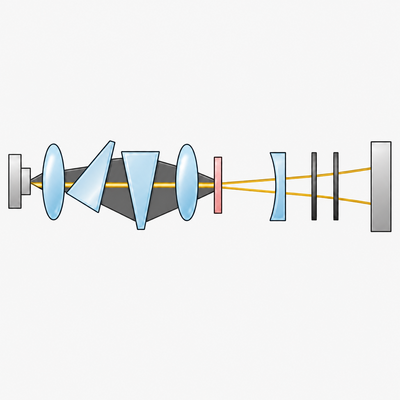
Observation of Ince-Gaussian modes in stable resonators
U. T. Schwarz, M. A. Bandres, J. C. Gutiérrez-Vega · Optics Letters 29, 1870 (2004)
★ Optics in 2004PDF
Abstract
We report what is to our knowledge the first observation of Ince – Gaussian modes directly generated in a stable resonator. By slightly breaking the symmetry of the cavity of a diode-pumped Nd:YVO4 laser and its pump beam configuration we were able to generate single high-order Ince – Gaussian modes of high quality. The observed transverse modes have an inherent elliptic structure and exhibit remarkable agreement with theoretical predictions.
Elegant Ince-Gaussian beams
M. A. Bandres · Optics Letters 29, 1724 (2004)
Abstract
The existence of elegant Ince – Gaussian beams that constitute a third complete family of exact and biorthogonal elegant solutions of the paraxial wave equation is demonstrated. Their transverse structure is described by Ince polynomials with a complex argument. Elegant Ince – Gaussian beams constitute exact and continuous transition modes between elegant Laguerre – Gaussian and elegant Hermite – Gaussian beams. The expansion formulas among the three elegant families are derived.
Ince-Gaussian modes of the paraxial wave equation and stable resonators
M. A. Bandres, J. C. Gutiérrez-Vega · JOSA A 21, 873 (2004)
Abstract
We present the Ince–Gaussian modes that constitute the third complete family of exact and orthogonal solutions of the paraxial wave equation in elliptic coordinates and that are transverse eigenmodes of stable resonators. The transverse shape of these modes is described by the Ince polynomials and is structurally stable under propagation. Ince–Gaussian modes constitute the exact and continuous transition modes between Laguerre– and Hermite–Gaussian modes. The expansions between the three families are derived and discussed. As with Laguerre–Gaussian modes, it is possible to construct helical Ince–Gaussian modes that exhibit rotating phase features whose intensity pattern is formed by elliptic rings and whose phase rotates elliptically.
Ince-Gaussian beams
M. A. Bandres, J. C. Gutiérrez-Vega · Optics Letters 29, 144 (2004)
Abstract
We demonstrate the existence of the Ince – Gaussian beams that constitute the third complete family of exact and orthogonal solutions of the paraxial wave equation. Their transverse structure is described by the Ince polynomials and has an inherent elliptical symmetry. Ince– Gaussian beams constitute the exact and continuous transition modes between Laguerre and Hermite – Gaussian beams. The propagating characteristics are discussed as well.
Branched Flow of Light

Observation of branched flow of light
A. Patsyk, U. Sivan, M. Segev, M. A. Bandres · Nature 583, 60 (2020)
★ Optics in 2020PDF
Abstract
When waves propagate through a weak disordered potential with correlation length larger than the wavelength, they form channels (branches) of enhanced intensity that keep dividing as the waves propagate1. This fundamental wave phenomenon is known as branched flow. It was first observed for electrons1–6 and for microwave cavities7,8, and it is generally expected for waves with vastly different wavelengths, for example, branched flow has been suggested as a focusing mechanism for ocean waves9–11, and was suggested to occur also in sound waves12 and ultrarelativistic electrons in graphene13. Branched flow may act as a trigger for the formation of extreme nonlinear events14–17 and as a channel through which energy is transmitted in a scattering medium18. Here we present the experimental observation of the branched flow of light. We show that, as light propagates inside a thin soap membrane, smooth thickness variations in the film act as a correlated disordered potential, focusing the light into filaments that display the features of branched flow: scaling of the distance to the first branching point and the probability distribution of the intensity. We find that, counterintuitively, despite the random variations in the medium and the linear nature of the effect, the filaments remain collimated throughout their paths. Bringing branched flow to the field of optics, with its full arsenal of tools, opens the door to the investigation of a plethora of new ideas such as branched flow in nonlinear media, in curved space or in active systems with gain. Furthermore, the labile nature of soap films leads to a regime in which the branched flow of light interacts and affects the underlying disorder through radiation pressure and gradient force.
Photonic Lanterns

Efficient modeling of tapered photonic structures
K. Tschernig, S. Bhargava, V. Zimmermann, D. Cruz-Delgado, S. Leon-Saval, S. Eikenberry, R. Amezcua-Correa, M. A. Bandres · npj Nanophotonics 3, 4 (2026)
Abstract
Tapered optical structures play a crucial role in modern photonics, enabling efficient coupling, mode conversion, and multiplexing. Modeling such structures is challenging since, as the region of interest shrinks, there is a significant loss of numerical resolution. We present a novel approach to modeling tapered structures by introducing the taper reference frame, which renders the tapered refractive index profile constant. Working in this frame eliminates the need for recalculating or resizing the refractive index distribution, which reduces computational overhead. Most importantly, our approach maintains high resolution in the region of interest, critical for capturing intricate features of the taper. We validate our method by comparing our simulations with analytical solutions. We applied our model to the analysis of photonic lanterns. Our results demonstrate vastly improved accuracy and computational efficiency compared to existing approaches. The proposed tapered reference frame technique enables major advancements in the design and optimization of optical devices across various applications.

Tunable hyperspectral filter based on rotated chirped volume Bragg gratings
S. Yaraghi, D. Guacaneme, S. Bhargava, A. Alhalemi, D. Cruz-Delgado, R. Amezcua-Correa, I. Divliansky, M. A. Bandres · Optics Letters 50, 4454 (2025)
Abstract
Spectral filtering of the transverse profile of hyperspectral beams is essential in various areas of optics, from multimode photonics and hyperspectral imaging to optical communications. An optimal hyperspectral filter requires flexible tuning capabilities, both in central wavelength and spectral bandwidth. Currently available filters—such as thin-film, acousto-optic, and liquid crystal tunable filters (TFTFs, AOTFs, and LCTFs)—exhibit limitations such as restricted tuning ranges, compromised image quality, or relatively low damage thresholds. Here, we propose and demonstrate a novel, to our knowledge, tunable hyperspectral filter based on rotated chirped volume Bragg gratings. Our filter enables continuous and independent tuning of the central wavelength and full-width at half-maximum (FWHM) bandwidth, steep spectral edges, and high out-of-band rejection. Furthermore, it offers higher damage threshold compared to existing alternatives. Its compact, passive architecture eliminates the need for external power, making it a robust and efficient alternative to current tunable filtering technologies.

Wavelength-dependent evolution of full-field transfer matrices in photonic lanterns
C. Dobias, M. A. Römer, S. Bhargava, T. Crowe, L. F. Quinn Reyes, D. Smith, M. Barzallo, D. Cruz-Delgado, S. Leon-Saval, S. Yerolatsitis, M. A. Bandres, S. S. Eikenberry, R. Amezcua-Correa · Optics Express 34, 17217 (2026)
Abstract
A fiber-based photonic lantern can couple an array of single-mode optical fibers to the guided modes of a multimode fiber, with the mapping between the single-mode fibers and guided modes fully described by a complex-valued transfer matrix. Recent experimental studies have reported strong wavelength-dependent evolution of this matrix in non-mode-selective photonic lanterns, yet a quantitative physical explanation for this behavior has not previously been demonstrated. Here, we present direct measurements of the wavelength-dependent encoding transfer matrix of a photonic lantern across the range 1525 nm to 1575 nm using off-axis holographic imaging, enabling high-fidelity recovery of both amplitude and phase. Beyond measurement, we introduce a physically grounded propagation model and numerical simulation that quantitatively reproduces the observed wavelength evolution and provides a unified physical explanation for the behavior reported in prior experimental work. The model identifies differential modal phase accumulation in the multimode section as the dominant mechanism governing spectral evolution and shows that increasing the length of the multimode end systematically accelerates the phase evolution of the transfer matrix with wavelength. These results establish a direct and predictive link between photonic lantern geometry and spectral response, providing a design framework for tailoring lanterns either to enhance sensitivity to closely spaced wavelengths or to enforce uniform response over broad bandwidths for spectroscopic and imaging applications.

Decoding the complex transfer matrix of photonic lanterns
S. S. Eikenberry, M. A. Römer, A. Batarseh, R. Conwell, T. Crowe, C. Dobias, S. Bhargava, M. Cooper, D. Cruz-Delgado, S. Yerolatsitis, S. Thibaut, K. Donaldson Hanna, S. Leon-Saval, R. Amezcua-Correa, M. A. Bandres · Research Square preprint (2026)
Abstract
Photonic devices that sort and separate light into spatial modes enable transformative advances in quantum-inspired sub-diffraction imaging, high-fidelity wavefront sensing, free-space optical communication, and quantum information processing. Among these, photonic lanterns offer a compelling solution — efficiently coupling light from a multimode fiber (MMF) into multiple single-mode fibers (SMFs) across a broad wavelength range, facilitating downstream detection and processing. However, effective deployment of photonic lanterns for mode sorting requires knowledge of the full complex transfer matrix — capturing amplitude and phase relationships between MMF modes and SMF outputs. Prior intensity-only approaches fail to recover this essential information. Here we present the first experimental measurement of the complete multimode-to-single-mode complex transfer matrix of a photonic lantern. Using 787 known multimode input fields and a dispersive spectrograph, we reconstruct wavelength-resolved transfer matrices for a 19-port lantern across the 720–880 nm range. We validate the matrices by predicting output intensities for unseen input fields, achieving high fidelity across all wavelengths. This technique enables full-field utilization of photonic lanterns — including amplitude, phase, polarization, and spectral content — transforming them from intensity couplers into fully calibrated optical interfaces. Precisely modeling the behavior of arbitrary input fields significantly expands the scope of photonic lantern applications to include information-rich imaging and high-capacity communications.
Optical Fibers
Spatiotemporal control of ultrafast pulses in multimode optical fibers
D. Cruz-Delgado, J. E. Antonio-Lopez, A. Perez-Leija, N. K. Fontaine, S. Eikenberry, D. N. Christodoulides, M. A. Bandres, R. Amezcua-Correa · Nature Communications 16, 6081 (2025)
Abstract
Multimode optical fibers represent the ideal platform for transferring multidimensional light states. However, dispersion degrades the correlations between the light’s degrees of freedom, thus limiting the effective transport of ultrashort pulses between distant nodes of optical networks. Here, we demonstrate that tailoring the spatiotemporal structure of ultrashort light pulses can overcome the physical limitations imposed by both chromatic and modal dispersion in multimode optical fibers. We synthesize these light states with predefined spatial and chromatic dynamics through applying a sequence of transformations to shape the optical field in all its dimensions. Similar methods can also be used to overcome dispersion processes in other physical settings like acoustics and electron optics. Our results will enable advancements in laser-based technologies, including multimode optical communications, imaging, ultrafast light-matter interactions, and high brightness fiber sources.