QUANTUM NONLINEAR PHOTONICS
Shaping Macroscopic Quantum Light
We explore how nonlinear optical systems can generate, control, and measure complex states of light at the boundary between classical and quantum physics.
Our research combines nonlinear optics, optical parametric oscillators, ultrafast photonics, and quantum measurement to harness macroscopic quantum effects for sensing, computing, and information processing.
Our Research
A central goal of our group is to understand how microscopic quantum phenomena can be transformed into macroscopic optical signals that are easier to control, measure, and ultimately use.
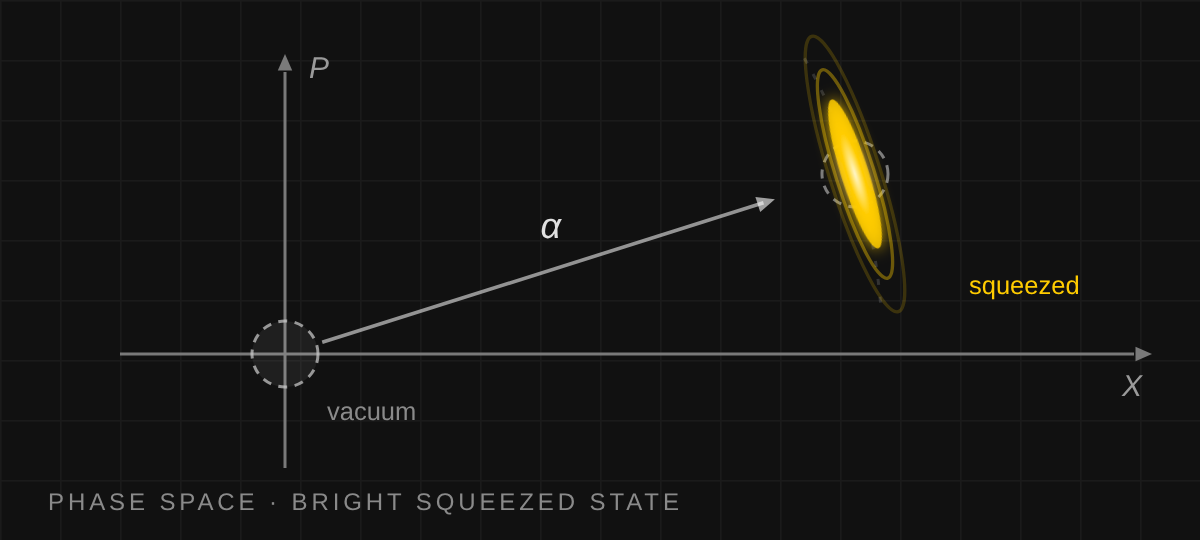
Macroscopic Quantum Light
We investigate bright optical fields that contain large numbers of photons while retaining quantum correlations, squeezing, and other nonclassical properties.
Our work includes bright squeezed light, correlated signal–idler systems, and quantum optical frequency combs.
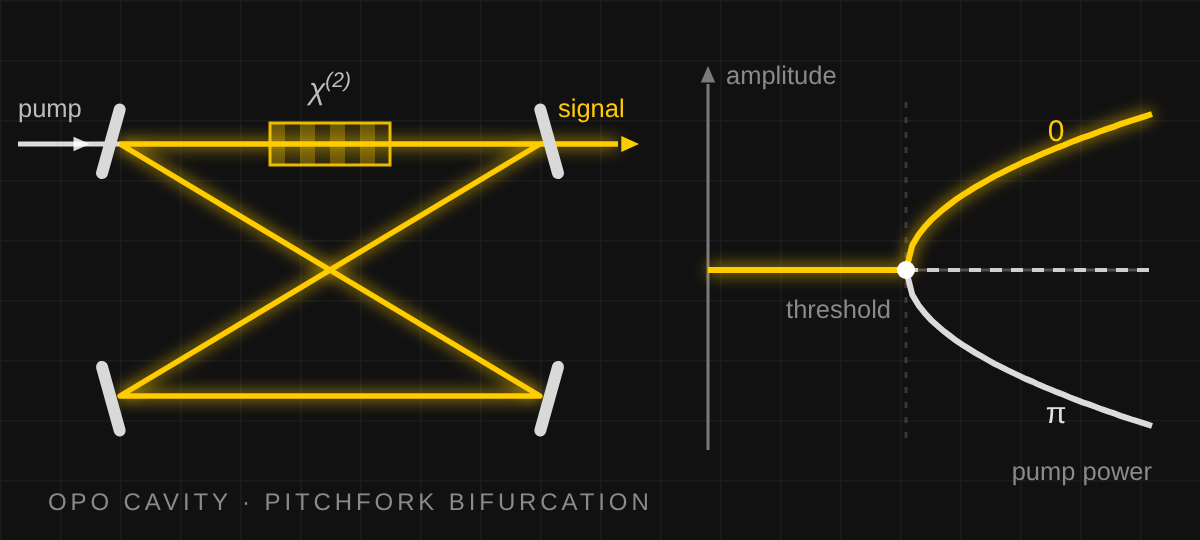
Nonlinear Optical Oscillators
Optical parametric oscillators provide a powerful platform for investigating nonlinear dynamics, quantum fluctuations, and nonequilibrium phase transitions.
We engineer these systems so that weak perturbations can produce large, measurable changes in their macroscopic optical state.
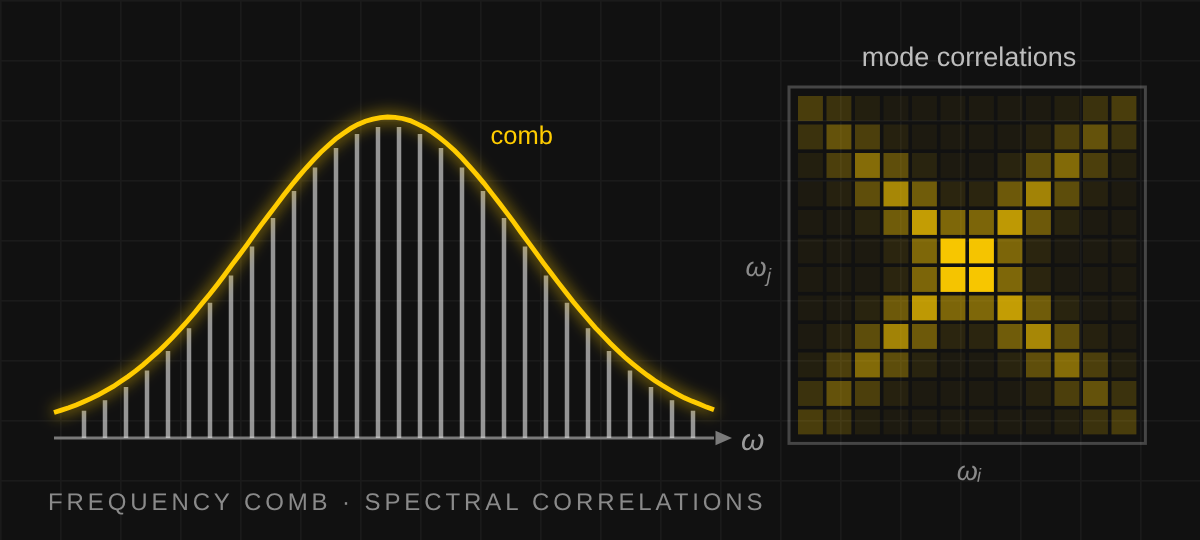
Multimode Quantum Photonics
Ultrafast nonlinear systems naturally generate many interacting spectral and temporal modes. We treat this multimode structure as a resource rather than a complication.
We study quantum correlations, entanglement, and collective supermodes across broadband optical frequency combs.
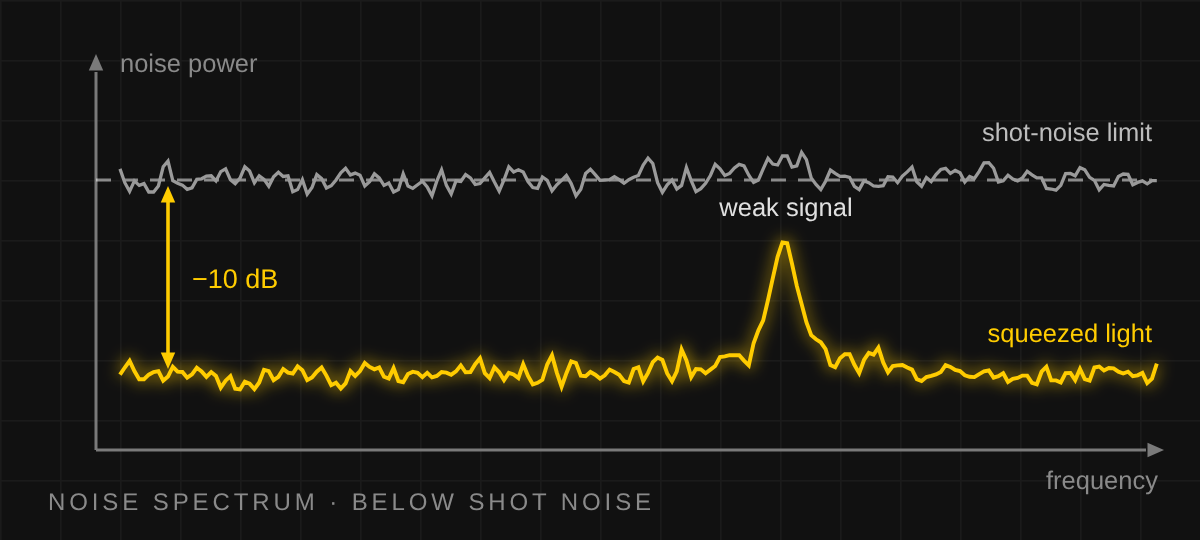
Quantum-Enhanced Sensing
We investigate how squeezing, entanglement, and nonlinear phase transitions can improve measurements of weak optical signals, phase, displacement, vibration, and spectral signatures.
Our goal is to develop practical quantum sensing architectures based on bright light and conventional optical detection.
Photonic Computing
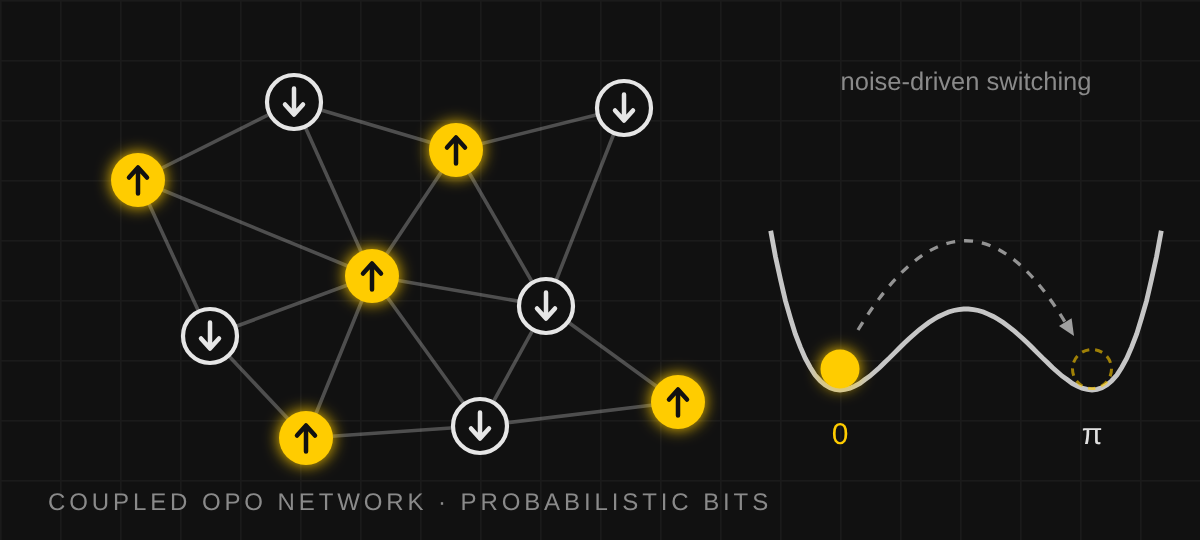
Nonlinear optical systems can perform computation through their intrinsic physical dynamics.
We explore optical parametric oscillators as probabilistic elements for sampling, optimization, machine learning, and new forms of physics-based computing.
Quantum Measurement & Readout
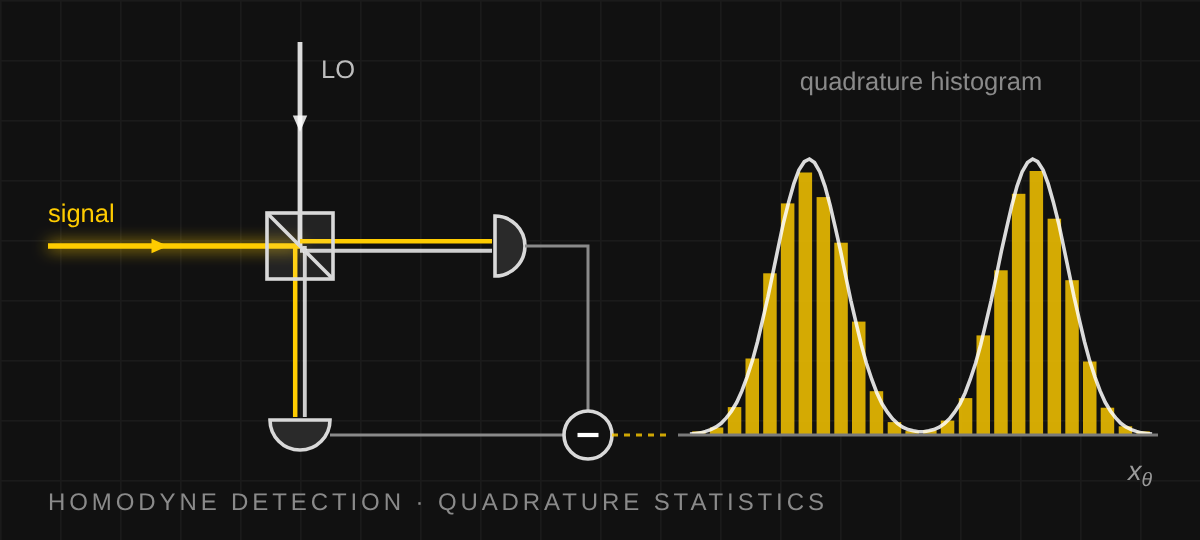
We develop methods for mapping subtle quantum properties onto bright optical observables that can be measured efficiently.
This includes quantum-state tomography, nonlinear amplification, and correlation-mediated approaches to minimally invasive quantum measurement.
HOW WE WORK
Experiment, Theory & Technology
Our research integrates experimental photonics with analytical and numerical modeling. We build optical systems from the ground up and use them to investigate both fundamental physics and emerging applications.
THE QUESTION DRIVING OUR RESEARCH
How can nonlinear photonic systems transform microscopic quantum effects into macroscopic optical signals useful for sensing, computation, and measurement?